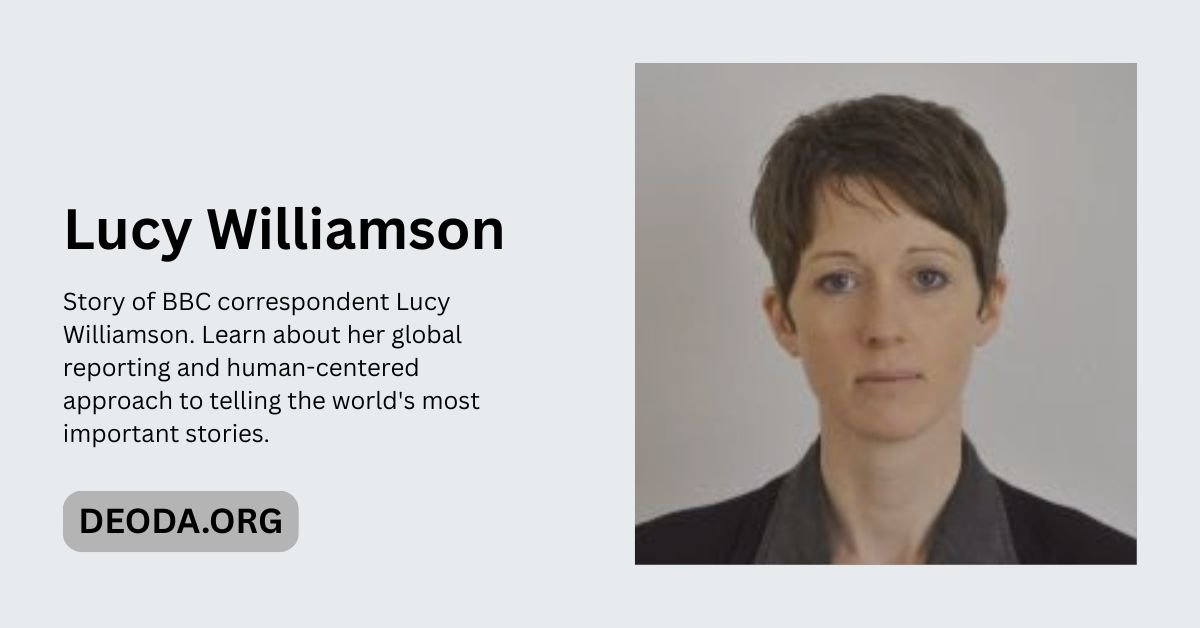
In an era defined by rapid news cycles and fleeting headlines, few journalists possess the ability to make us truly pause and understand the world around us. Lucy Williamson is one of those rare exceptions. As a seasoned BBC correspondent, she has become a familiar face and trusted voice for millions, guiding viewers through the complexities of international crises and cultural shifts.
Her reporting goes beyond mere observation. Williamson brings a unique blend of sharp analytical skills and profound empathy to her work, whether she is covering political turmoil in Europe or diplomatic tensions in Asia. This article re-examines her illustrious career, breaking down the elements that make her a standout figure in modern journalism.
Contents
The Professional Journey: From Cambridge to the World Stage
Lucy Williamson’s rise to prominence was not accidental. It was built on a foundation of rigorous education and grassroots experience.
Academic Roots
Before she was reporting from conflict zones, Williamson was honing her intellectual tools.
- Institution: University of Cambridge
- Focus: Modern Languages
- Impact: This academic background provided her with the linguistic agility and cultural sensitivity required to navigate foreign environments effectively.
Early Career Milestones
Every great correspondent starts somewhere. Williamson’s journey began far from the glamour of international bureaus.
- Local Radio: She cut her teeth in local broadcasting, learning the essential art of storytelling and community connection.
- The BBC Ladder: Joining the BBC allowed her to explore various roles—from production to presentation—giving her a holistic view of the news industry.
- Field Training: These early years were crucial for developing the resilience and quick thinking needed for high-pressure reporting.
Key Assignments: A Global Portfolio
A foreign correspondent’s career is defined by where they go and what they witness. Lucy Williamson’s passport stamps tell the story of a journalist unafraid to be at the center of the action.
The Paris Bureau: Analyzing a Nation in Flux
During her tenure as the Paris correspondent, Williamson became the eyes and ears for the English-speaking world regarding French affairs.
- Political Shifts: She provided deep dives into French presidential elections, explaining the rise of new political movements to an international audience.
- Crisis Reporting: Her coverage of terrorist attacks in Paris was marked by a careful balance of factual reporting and respectful sensitivity to the victims.
- Social Commentary: Beyond politics, she explored the cultural fabric of France, from labor strikes to the nuances of French identity.
The Korean Peninsula: The Diplomatic Frontline
Moving from Europe to Asia, Williamson took on one of the most challenging beats in journalism: The Koreas.
Key Areas of Focus:
- North Korea: Gaining rare access to Pyongyang, she offered glimpses into one of the world’s most secretive regimes. Her reporting during nuclear tensions was critical for global understanding.
- South Korea: She covered the vibrant democracy of Seoul, reporting on everything from the impeachment of a president to the global explosion of K-Pop.
- The Human Cost: Perhaps most poignantly, she highlighted the stories of families separated by the DMZ, bringing a human face to a geopolitical standoff.
The “Williamson Effect”: Why Her Journalism Matters
What distinguishes Lucy Williamson from her peers? It isn’t just where she goes, but how she reports when she gets there.
1. The Human-Centric Lens
While many reporters focus on statistics and soundbites from officials, Williamson looks for the people.
- She amplifies the voices of ordinary citizens caught in extraordinary circumstances.
- Her interviews often feel like conversations, eliciting genuine emotion and insight.
- She frames global events through individual experiences, making distant problems feel relatable and urgent.
2. Clarity in Complexity
The modern world is messy. Williamson has a gift for untangling the knots.
- Contextualization: She doesn’t just say what happened; she explains why it matters.
- Accessibility: She avoids jargon, translating complex diplomatic language into clear, understandable terms.
- Balance: In polarized situations, she maintains the BBC’s standard of impartiality, presenting multiple viewpoints fairly.
3. Fearless Presence
Whether standing in a crowd of protesters or reporting from a restricted zone, she projects a calm, authoritative presence. This reliability builds trust with the audience, who know they are getting the unvarnished truth.
The Future of Foreign Correspondence
Lucy Williamson’s career serves as a blueprint for the future of international journalism. In a digital age where misinformation spreads instantly, the need for verified, on-the-ground reporting is more critical than ever.
Her work reminds us that algorithms cannot replace human witnesses. We need journalists who are willing to go to the source, ask the hard questions, and listen to the answers. As she continues to cover stories that shape our world, Williamson remains a vital link between the event and the audience, ensuring that the truth is not just heard, but understood.
Frequently Asked Questions (FAQ)
Q: Which network does Lucy Williamson work for?
A: Lucy Williamson is a long-time correspondent for the BBC (British Broadcasting Corporation).
Q: What languages does she speak?
A: She studied Modern Languages at Cambridge, and her fluency in French was a key asset during her time as the Paris correspondent.
Q: Has she reported from North Korea?
A: Yes, she is among the few Western journalists who have reported from inside North Korea, providing rare insights into the country.
Q: What is her reporting style known for?
A: She is renowned for her empathetic, human-focused storytelling that connects complex geopolitical events to the lives of ordinary people.
Q: Where is she currently based?
A: As a roving foreign correspondent, her base can change depending on the news cycle and BBC assignments, often moving between major international hubs.